
Beyond the Report: How Joint CIO–CFO Leadership Can Transform Government Reporting Productivity and Resilience
Across state and local government, core financial and regulatory reporting outputs, such as the Annual Comprehensive Financial Report (ACFR), Schedule of Expenditures of Federal Awards (SEFA), GASB disclosures, and recurring interim financial reporting, remain critical to public accountability. However, the greatest operational risk and opportunity for improvement does not reside in the outputs themselves. It resides in the business processes, controls, and operating models required to produce them.
CIOs and CFOs increasingly share accountability for these end-to-end processes. Modern government reporting is not a downstream document-assembly task; it is an enterprise workflow that spans data ingestion, governance, validation, review, audit support, and publication. The strength and efficiency of this workflow directly affect transparency, risk exposure, staff sustainability, and public trust.
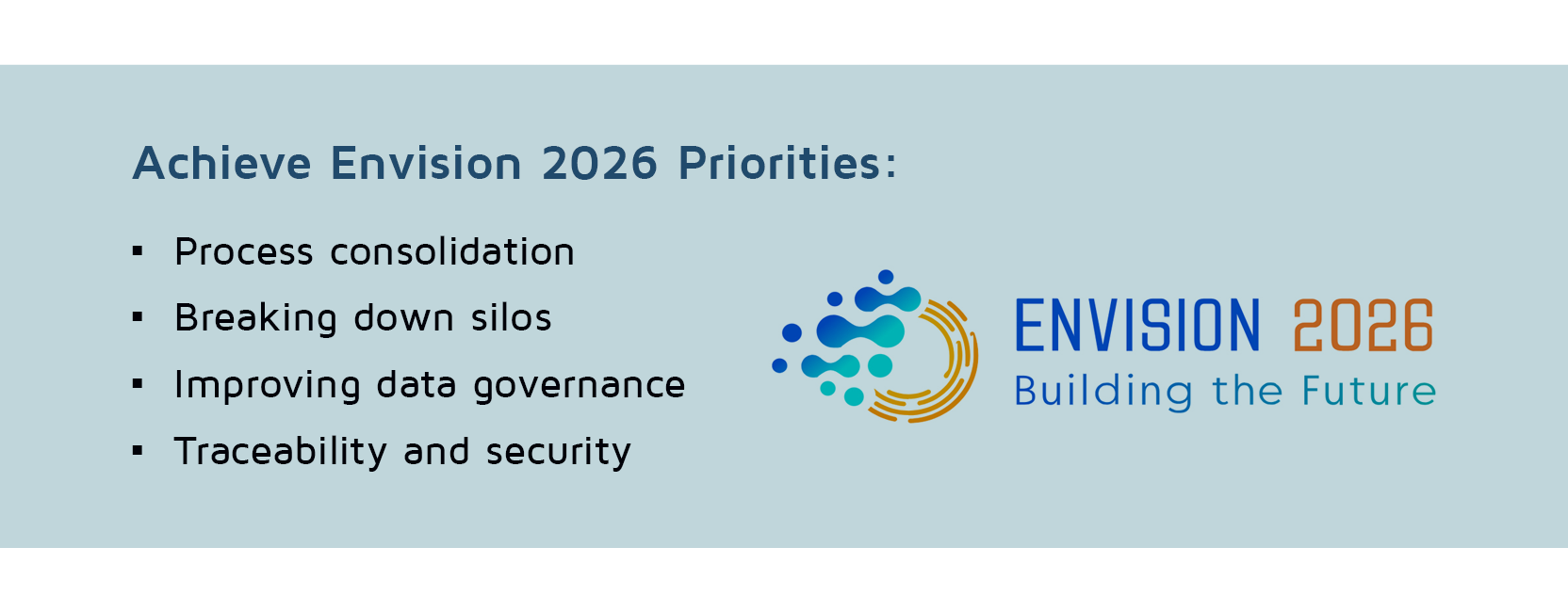
In California, this challenge intersects directly with the priorities of Envision 2026: California’s Technology Future:
- Goal 5 (Continually Future-Proof the Business of Government) emphasizes modularity, process consolidation, and emerging-tech readiness, while
- Goal 4 (Align Strategy Execution Across the State) calls for breaking down silos and improving performance excellence.
- Goal 2 (Secure California’s Technology Investments) further underscores the need for strong data governance, traceability, and cybersecurity in all enterprise workflows — including financial and regulatory reporting.
Core Challenge: The End-to-End Reporting Process
Most reporting challenges faced by governments are not driven solely by evolving accounting standards or disclosure requirements. The challenges posed by these changing standards are often exacerbated by fragmented, manual, and loosely governed processes used to assemble recurring reporting outputs. These operating models commonly rely on disconnected spreadsheet-centric calculations, informal review practices, late-cycle validation, and institutional knowledge concentrated among a small number of individuals.
These fragmented approaches often result in thousands of hours of unnecessary effort, late nights during reporting season, heavy reliance on a few institutional knowledge holders, elevated risk of errors or control weaknesses during audits, and limited capacity for proactive analysis or strategic initiatives.
In such environments, reporting outputs become point-in-time results produced through effort and heroics, rather than predictable outcomes generated by controlled and repeatable processes.
What Modernization Really Means
Modernizing government reporting is not only about changing report formats or accelerating publication timelines. It is about strengthening the end-to-end reporting solution so that compliant reporting outputs are produced reliably through disciplined execution.
A modern reporting operating model emphasizes controlled ingestion of source data, governed transformations and calculations, defined review and approval workflows, continuous validation throughout the reporting cycle, and full traceability from source data through final publication.
Add to these benefits a dramatic reduction in the manual effort required each cycle. Organizations that have modernized often report 30–50%+ reductions in preparation time for ACFR and interim reports, fewer last-minute adjustments, and greater staff capacity for value-added work such as forecasting, performance analysis, or process innovation. 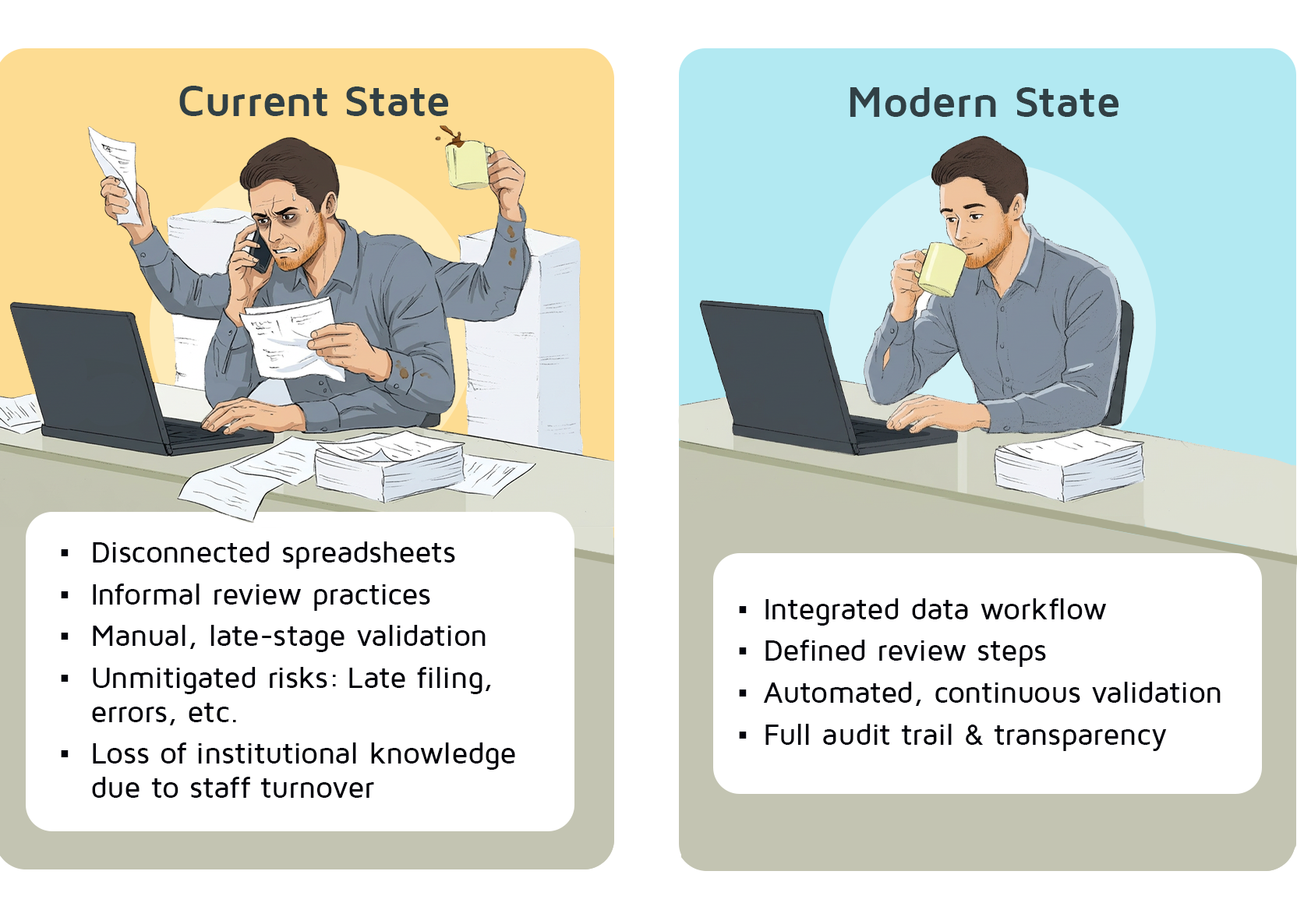
Standards and Governance Alignment
A process-centric reporting solution aligns with GAAP and GASB requirements, GFOA best practices, audit expectations related to documentation, version control, and evidence retention, and enterprise IT governance policies governing access control, security, and data integrity.
Perspective from F. H. Black & Company
The optimal approach is to address government reporting through the lens of end-to-end business process improvement and automation.
Having supported hundreds of public sector organizations in this journey, the focus should not be on the report as a document, but the operational system required to produce reporting outputs consistently, from data sourcing and validation through review, audit support, publication, and roll-forward to future periods.
Key to the success of these projects is not merely IT expertise. Improving business processes also requires experience in conducting these processes. That is why all FHB engagements are led by Principal Consultants who are CPAs, with extensive experience working in and with public sector finance, budget, treasury & audit teams. This ensures accounting standards, compliance obligations, and audit expectations are embedded directly into process design while remaining aligned with CIO responsibilities for governance, security, and enterprise resilience.
Closing Thought
For California CIOs and CFOs, the future of government reporting lies in treating it as a strategic enterprise capability rather than a recurring deadline-driven exercise. When supported by disciplined processes, modern platforms, and close collaboration between finance and technology leadership, organizations can achieve substantial productivity gains, lower operational risk, improve staff sustainability and morale, enhance audit readiness, and ultimately strengthen public trust and accountability. Strong reporting outputs are achieved not by working harder at deadlines, but by building processes and systems that perform reliably year after year.
To explore how your organization can modernize its end-to-end reporting processes while aligning with Envision 2026 priorities, contact F. H. Black & Company at www.fhblackinc.com or reach out directly to discuss a no-obligation process assessment.